atelierkakko
 Hello from Kagurazaka atelierKakko 😊
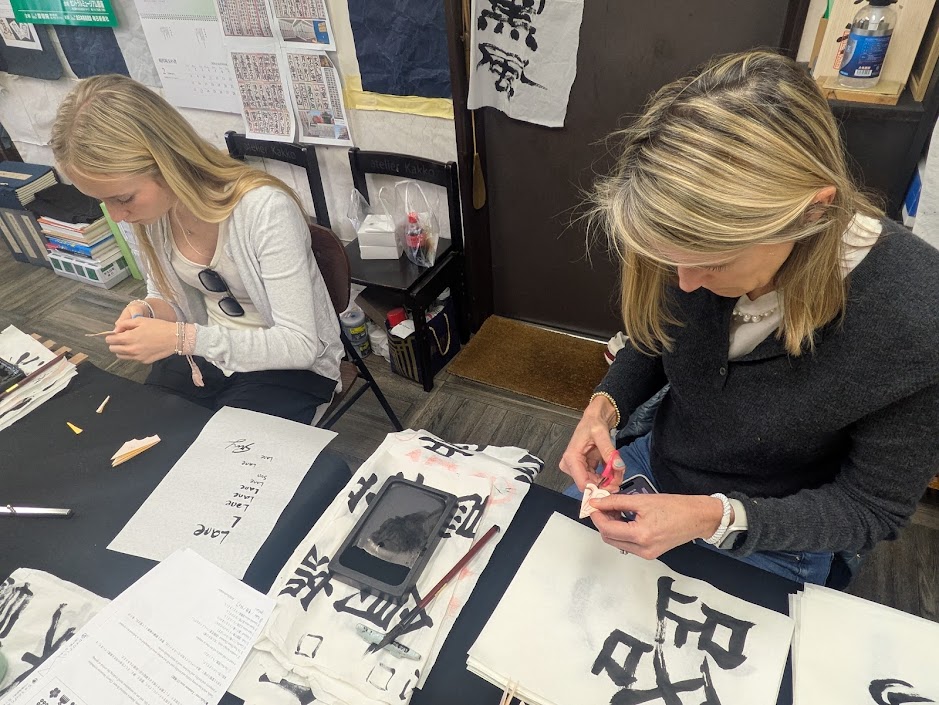
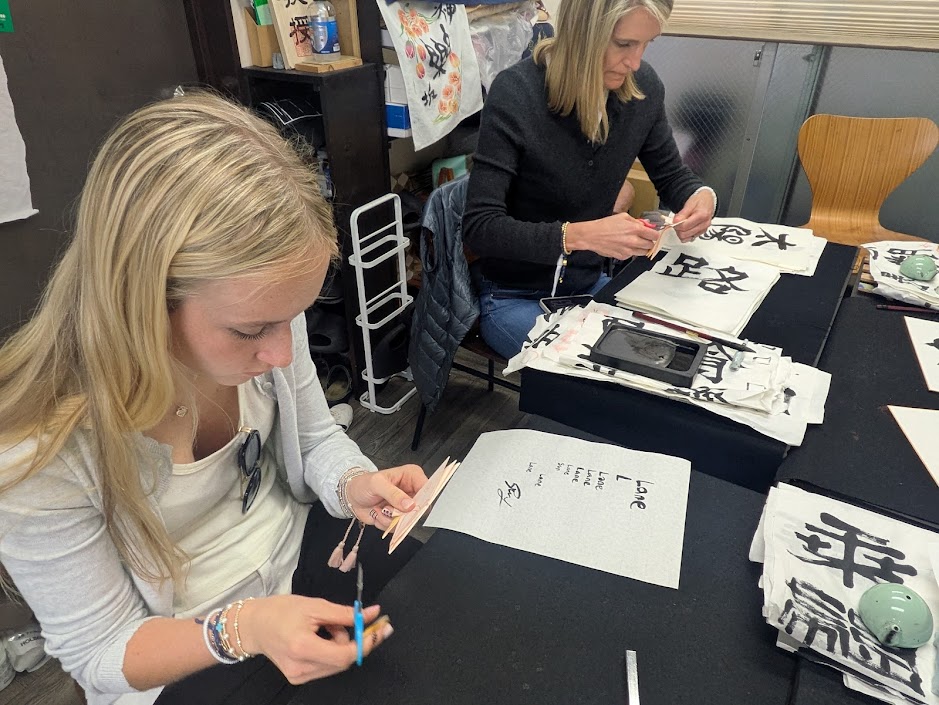
The other day, a lovely mother and daughter visiting from the United States joined us for a calligraphy experience.
First, they practiced basic horizontal and vertical brush strokes, and then moved on to writing their names.
They both had a natural talent for handling the brush, and after practicing on just two sheets of paper, they were ready to work on their characters.
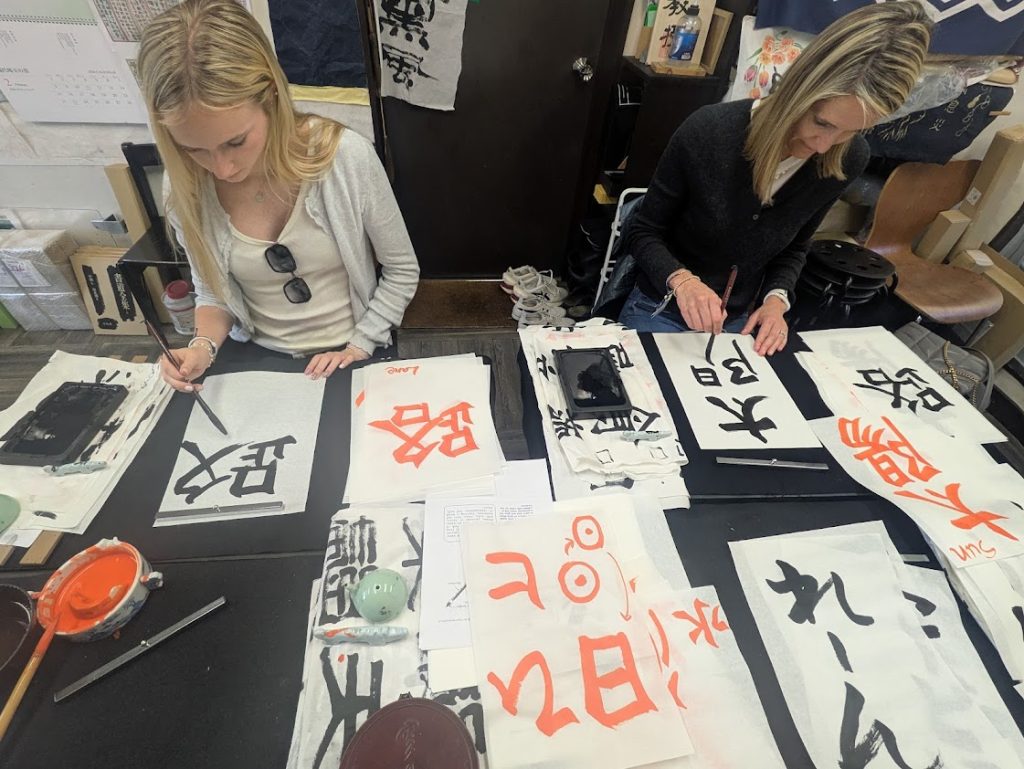
Lane and Courtney each completed their pieces in a single, confident attempt.
Their characters had a charming, rustic quality—so fresh and honest.
There was a purity in their brush lines that Japanese adults often struggle to achieve ✨
Since they also wanted to try writing kanji,
I prepared examples of the characters they chose. Lane selected “Road” (路) to reflect her name, and Courtney chose “Sun” (太陽).
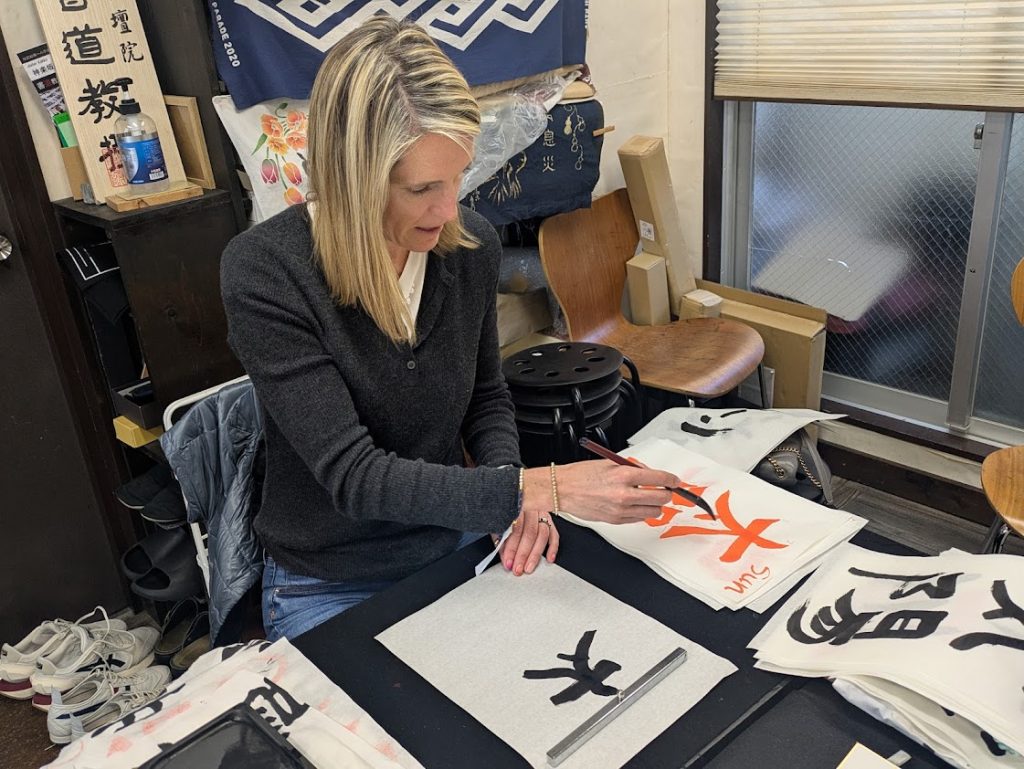
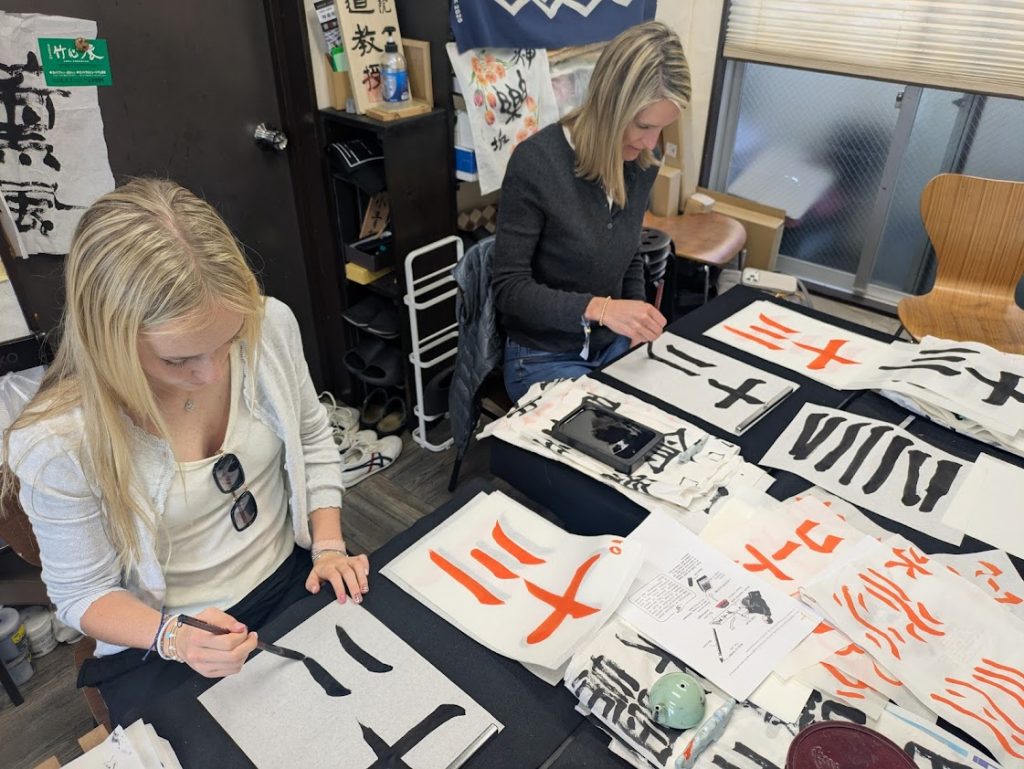
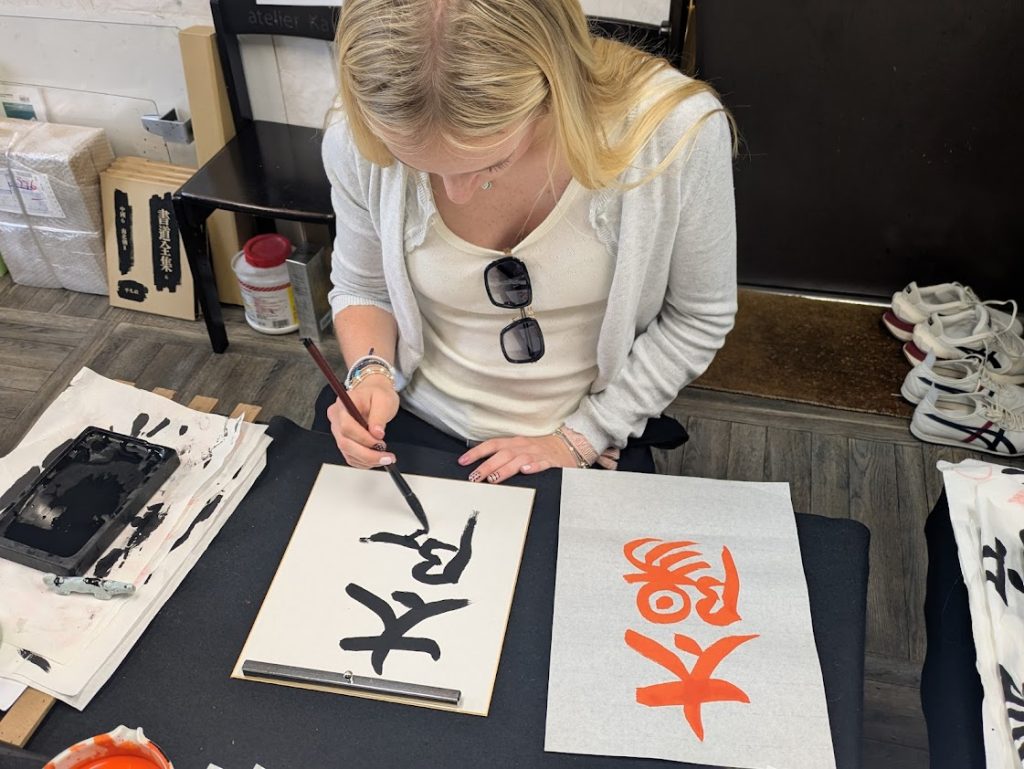
The character yō (陽) in taiyō looked quite challenging at first, so we reimagined it almost like a geometric shape. I encouraged her to picture a round sun to make it easier to write, and she tried again.
Although it is a complex character with many strokes, after only two practice attempts she produced a truly wonderful final piece 👏
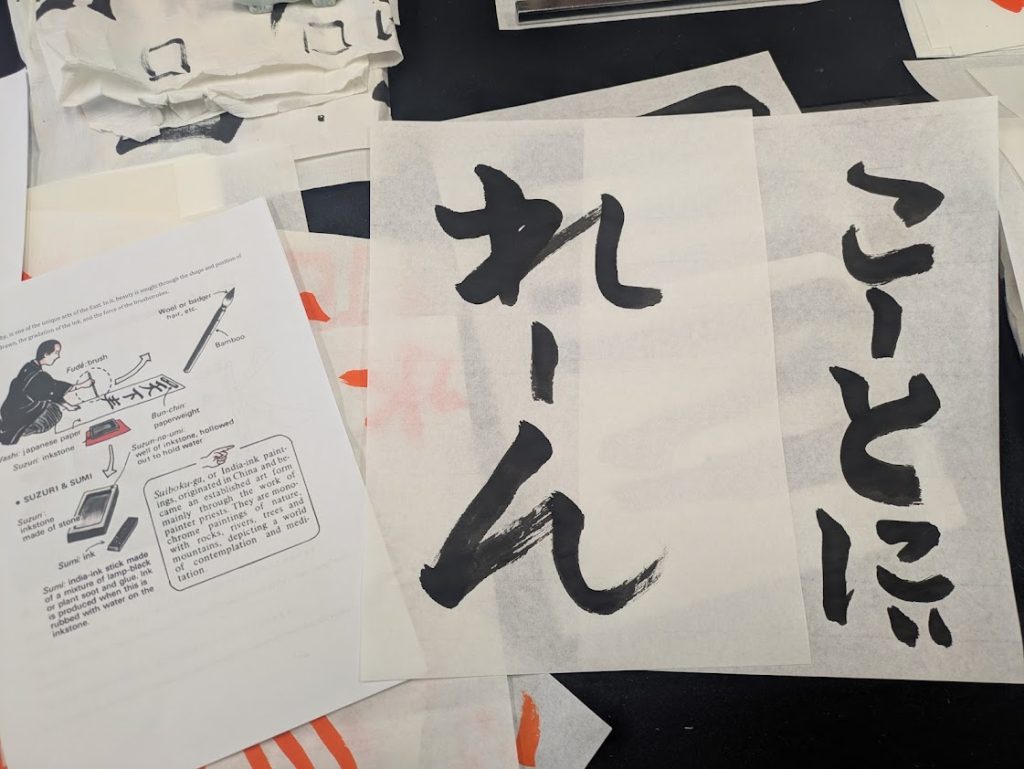
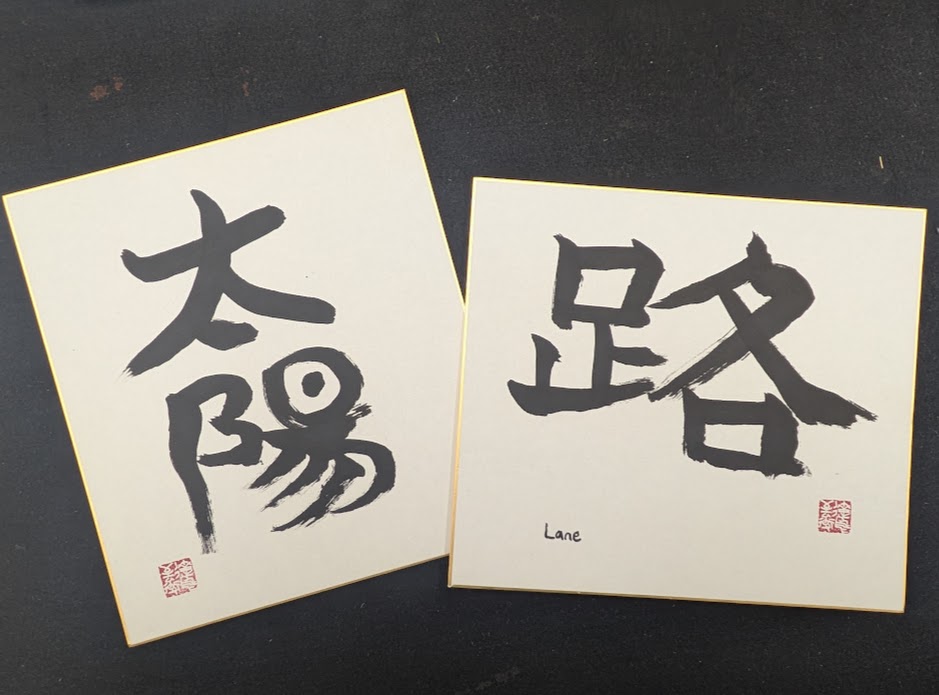
When it came time to write the final version on decorative shikishi boards, the mother suddenly seemed to lose a bit of confidence and entrusted the final copy to her daughter 😊; however, her own writing was so skillful that it was hard to believe it was her first time.
Both of them had excellent intuition and completed their artworks very smoothly.
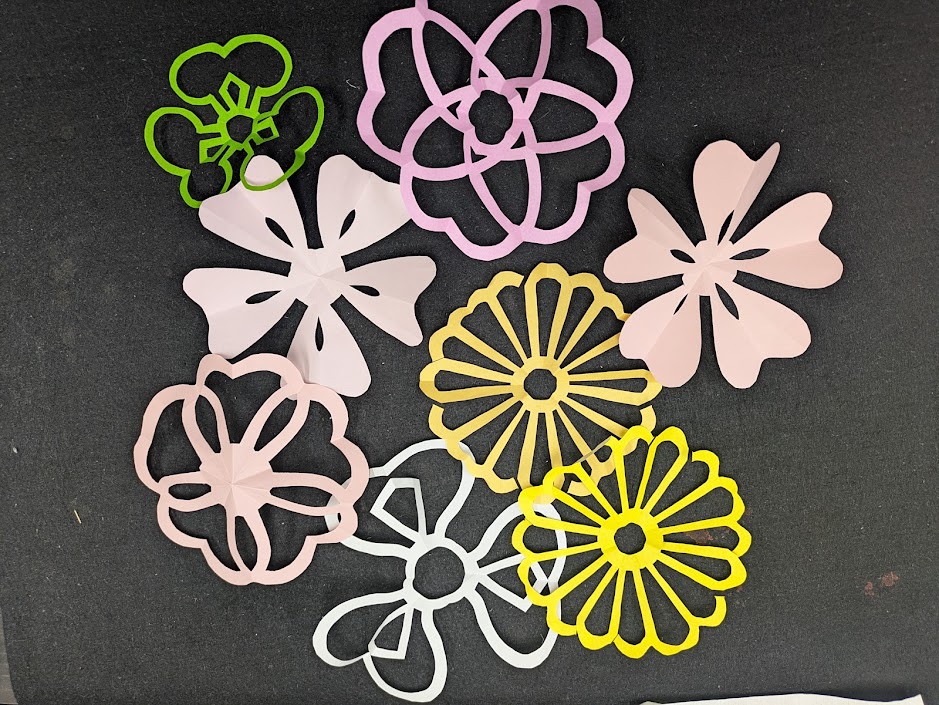
After that, they enjoyed an optional activity: monkiri paper cutting ✂
Monkiri is a traditional Japanese paper-cutting pastime that has been enjoyed since the Edo period.
By cutting out traditional Japanese motifs, you create beautiful symmetrical patterns when the paper is unfolded—simple yet surprisingly delightful.
This time, they cut many cherry blossom 🌸 designs, along with chrysanthemum and wood sorrel patterns.
Not many participants choose to try monkiri, but watching them enjoy it reminded me how accessible and delightful this aspect of Japanese culture can be.
I would love for more visitors to experience it alongside calligraphy in the future ♪